
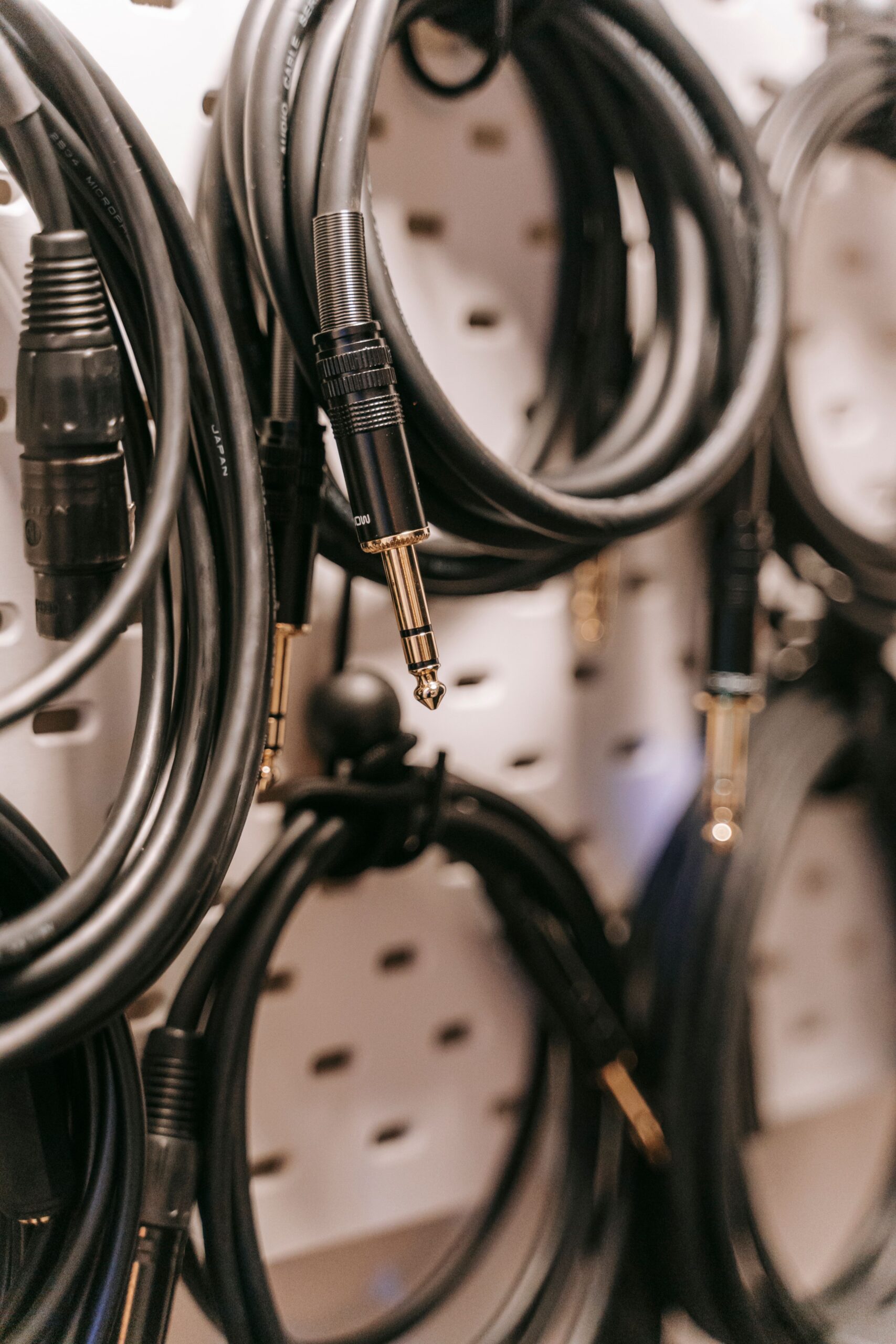
There is a particular kind of audiophile snobbery that gets aimed at cables.
Spend more than twenty euros on an interconnect and someone on a forum will tell you that cables make no measurable difference, that you’ve been fooled by marketing, and that a coat hanger would sound identical. Spend less than five and a different group will tell you that you’re destroying your signal chain and that you might as well be listening through a tin can on a string.
Both camps are wrong, and neither is helpful to the person who just bought their first turntable and is staring at the back of it wondering which of those bundled red and white cables they’re supposed to plug in.
Here’s what’s actually true: cables matter, within reason, for specific reasons, and the most important cable in your entire setup is probably the one nobody told you existed.
It’s the ground wire.
What Does a Turntable Ground Wire Actually Do?
That thin, often unterminated cable — sometimes grey, sometimes bare copper, usually tangled at the bottom of the box — is the difference between a turntable that sounds like music and one that sounds like a turntable. The ground wire connects the metal chassis of your deck to the grounding post on your phono preamp or amplifier, completing an electrical circuit that keeps the hum of your motor, your mains supply, and every other nearby electromagnetic source out of the signal path.
When it’s missing, loose, or broken, you get a 50 Hz hum that sits underneath everything like a foghorn. It’s not subtle. It turns a €150 turntable setup into something that sounds like a broken refrigerator with jazz playing inside it.

Why Does Turntable Hum Happen Without a Ground Wire?
The motor inside a turntable generates a small electromagnetic field as it runs. Without a proper ground path, that field has nowhere to go except into the signal path — specifically into the tonearm wiring and cartridge output, which the phono preamp then dutifully amplifies along with your music. The ground wire gives that interference a low-resistance path back to the circuit reference point, diverting it away from the signal before it can cause problems.
Why Do People Keep Losing Their Ground Wires?
And yet it’s the cable that gets thrown away, lost, or tangled past usability more than any other. Partly because it looks unimportant. Partly because the boxes never really explain what it does. Partly because most people assume that if their setup isn’t working right, the problem is something expensive and complicated, not a €9 wire that needs replacing.
The other reason is that many turntables ship with a ground wire that is just barely long enough to reach the grounding post if both pieces of equipment are sitting directly next to each other, which they often aren’t. So the wire gets stretched, the termination fails, and the hum returns — and since it came back rather than never going away, it gets diagnosed as a new problem rather than the original one resurfacing.
What to Look for in a Replacement Turntable Ground Wire
If you actually need to replace yours — or if your turntable arrived without one — here is what actually matters:
Length
Get at least 0.75m, preferably 1.2m. It costs the same and gives you flexibility in how you position your equipment.
Conductor Quality
Oxygen-free copper is the correct answer. The signal carried on a ground wire is not an audio signal, so the differences are less audible than on an interconnect, but a poorly conductive ground connection is worse than no ground at all in some configurations.
Terminations
Spade connector at the turntable end, fork terminal at the preamp end. Both should be crimped and soldered, not just crimped. A ground connection that fails under vibration is a problem that’s annoying to diagnose.
The Bigger Picture: Getting the Fundamentals Right First
The broader point here is that the signal chain from stylus tip to speaker cone is full of components that are cheap to get right and expensive to ignore. A decent ground wire. A phono preamp that isn’t adding noise. RCA cables that are actually shielded rather than just shaped like they might be. None of these things require an audiophile budget. They require the knowledge that they matter, which is precisely the knowledge that gets buried under advertisements for turntables that retail for the price of a small car.
Get the fundamentals right first. Spend the money where it moves the needle — sometimes literally. And don’t throw away the ground wire.
Next read: How to choose a phono preamp for your first turntable setup →
Leave a Reply