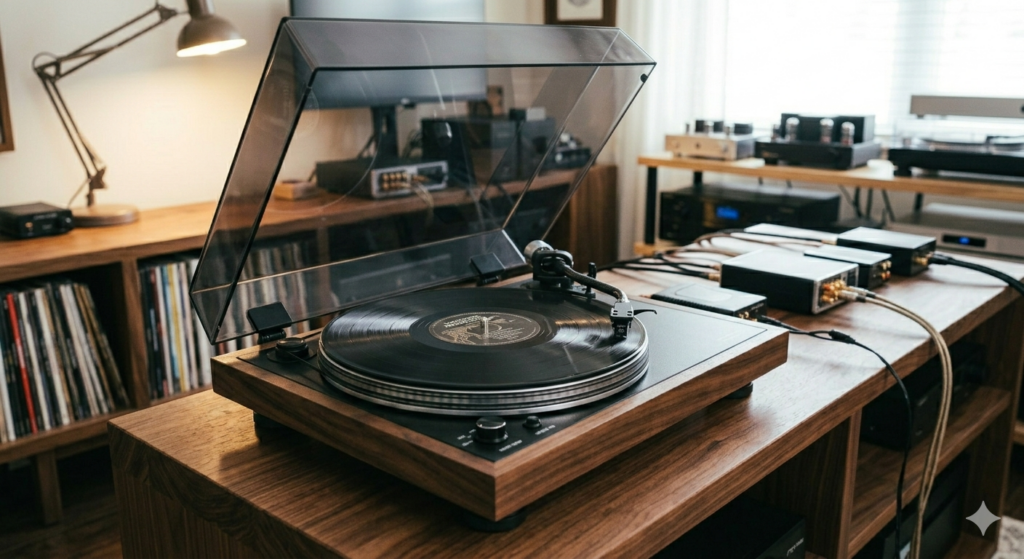
Every turntable review covers the platter.
The tonearm geometry. The motor isolation. The cartridge. The feet. Some reviews go deep on the plinth material, the bearing tolerance, the quality of the anti-skate mechanism. Almost none of them spend more than a sentence on the dust cover, and that sentence is usually something like “a dust cover is included.”
This is a mistake.
The Most-Touched Part of Any Turntable
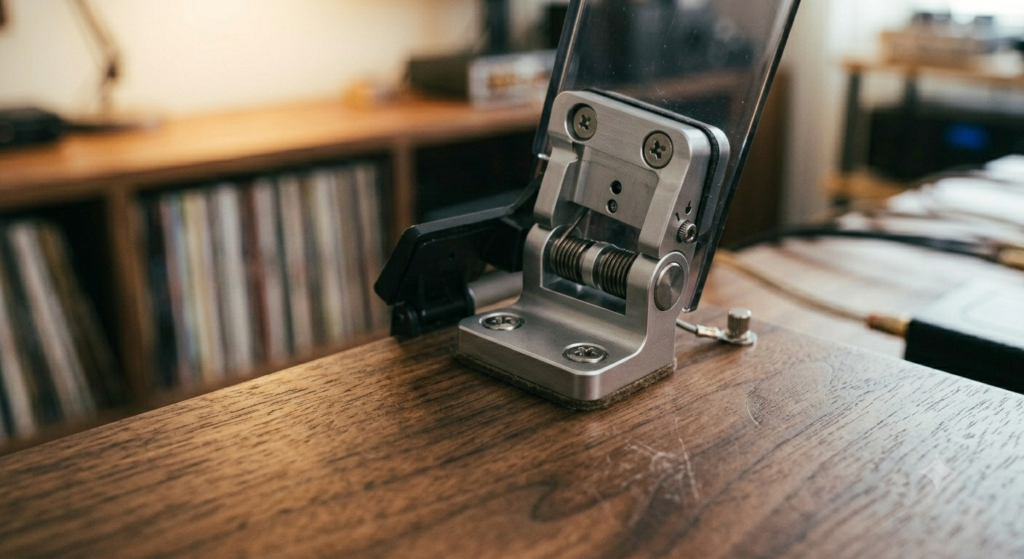
The dust cover is the component you interact with every single time you use the turntable. It is the hinge you lift before every side, the surface that accumulates fingerprints, the piece of clear acrylic that you stare through while the record plays. If the hinge is stiff, you’ll be annoyed every time you use the deck. If it doesn’t stay open at a stable angle, you’ll spend your listening sessions watching it slowly descend toward your tonearm like a guillotine. If the acrylic is thin or poorly supported, it’ll flex and crack within eighteen months.
What Happens When a Dust Cover Fails
I have owned a turntable where the dust cover hinge snapped after fourteen months. The deck itself was fine — good motor, decent tonearm, nice platter — but without the dust cover it collected dust at a rate that required weekly stylus cleaning rather than the usual monthly maintenance. A replacement cover cost nearly as much as the deck was worth on the secondhand market at that point.
I have also owned a turntable where the dust cover latched closed with a satisfying, precision click, stayed open at exactly the right angle, and showed no wear after five years of daily use.
The difference in the experience of owning those two decks was enormous, and it had nothing to do with sound quality.
Why dust protection matters for your stylus
A dust cover does more than keep the platter clean between listening sessions. Fine airborne particulate — dust, pet hair, skin cells — settles onto the record surface and is swept by the stylus into the groove walls on every pass. That debris accelerates stylus and groove wear, raises the noise floor, and reduces tracking accuracy. A dust cover that seals properly when closed prevents most of this. One that doesn’t close or doesn’t latch is functionally decorative.
What to Check Before Buying a Turntable
This matters because turntables are not purely listening devices. They are objects that live in a room, that get touched every day, that need to function mechanically for years before any of their sonic qualities become relevant. A turntable with a great cartridge and a terrible dust cover is an object that will frustrate you. A turntable with a good-enough cartridge and a great dust cover is one you’ll actually want to use.
When evaluating a turntable purchase — especially in the €150–€350 range where this kind of build-quality compromise is most common — ask the following:
Is the dust cover hinged or removable?
Hinged covers are more convenient for regular use. Removable covers are sometimes recommended for critical listening (they can transmit speaker vibrations to the platter if left on during playback), but for most listeners in most rooms, a well-fitting hinged cover is the right choice.
Does it latch?
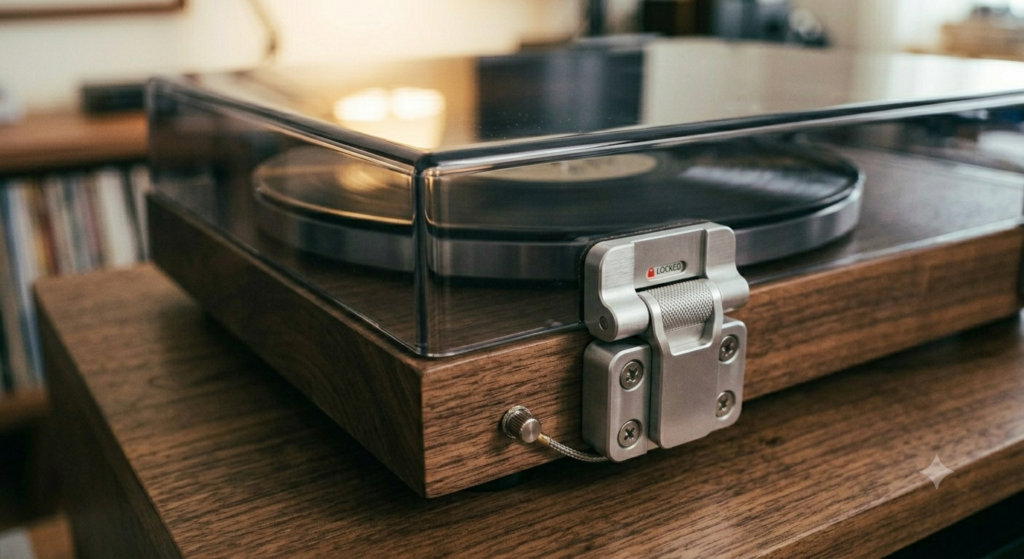
A cover that latches closed protects the stylus and the record surface during transport and storage. A cover that just rests in place doesn’t.
Are replacements available?
Search the model name plus “replacement dust cover” before you buy. If the results are empty or the only options are third-party blanks that don’t fit properly, that’s a risk you’re accepting.
The Best Turntable Is the One You Use
The best turntable is the one you use. The one you use is the one that doesn’t annoy you every time you touch it. The dust cover is where that annoyance most often lives.
Pay attention to the hinge.
Next read: The Cable Nobody Talks About (And Why It’s Costing You Sound Quality) →
Leave a Reply